

TAX PREFERRED BENEFITS FOR BUSINESS OWNERS
An HSA resembles a personal bank account as it works with debits and credits. With a positive account balance, an individual may obtain reimbursement for eligible medical and dental expenses and the account is debited by the paid amount. The amount deposited into each account must be used within a specified period (1 or 2 years), after which an unused balance is forfeited. This “use it or lose it” principle is required by Revenue Canada for the HSA to qualify as a private health services plan and is necessary to maintain a reasonable element of risk in the benefit plan for insurers.
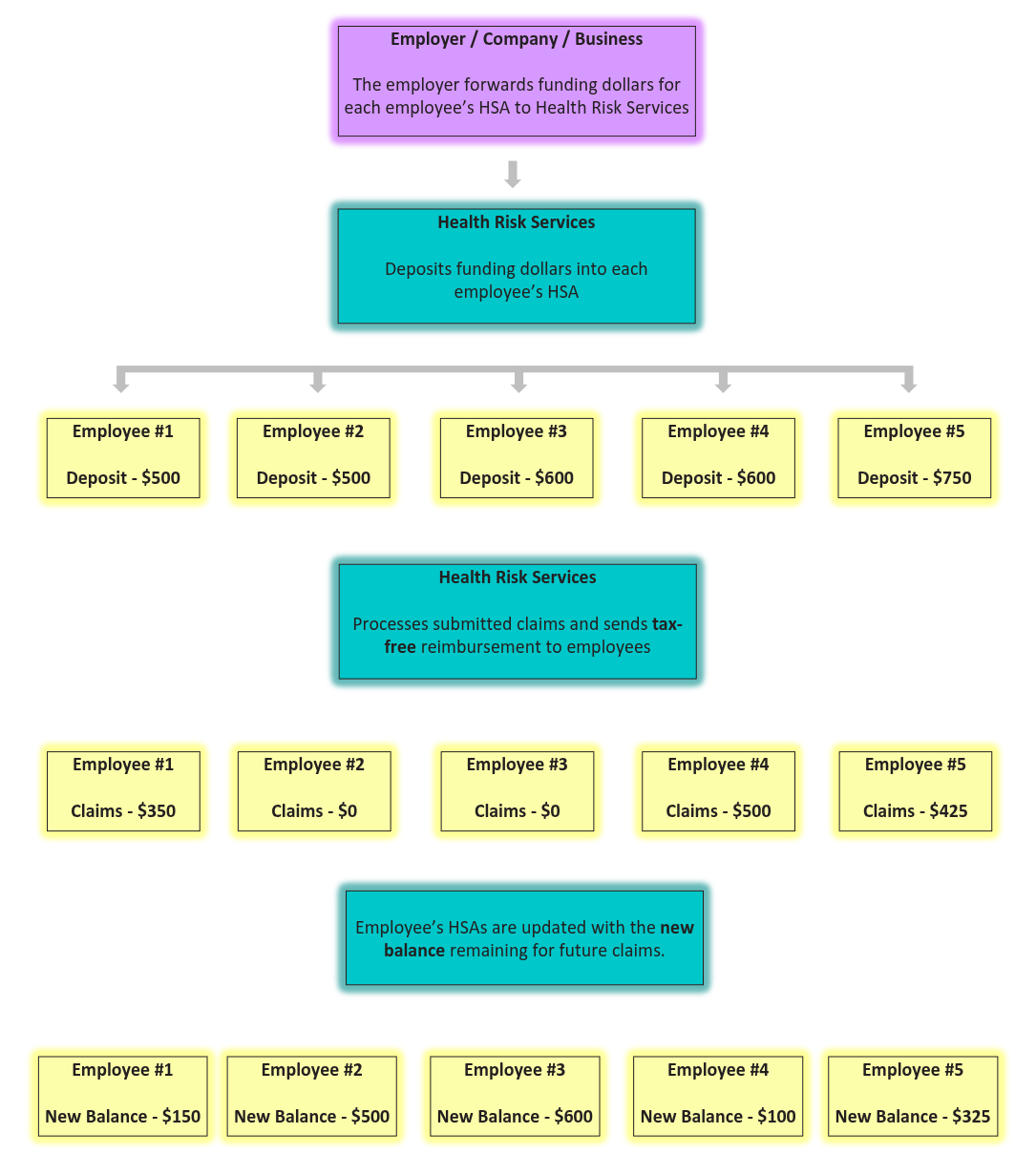
A Health Spending Account (HSA) functions as a reimbursement-based benefit plan funded entirely by the employer. A predetermined amount is allocated to each employee’s account, either annually, monthly, or on a pay-as-you-go basis.
When an employee incurs an eligible medical or dental expense, they submit a claim for reimbursement. Once approved, the expense is paid from the available balance in their account, and the remaining balance is updated accordingly.
Depending on the plan design, unused funds may be carried forward for a limited period or expire under “use it or lose it” rules, ensuring compliance with Canada Revenue Agency guidelines.
This structure provides a simple, transparent way for employers to control costs while giving employees flexibility in how they use their health benefits.

An HSA provides coverage to enable employees to meet their specific needs over and above a basic insurance plan for catastrophic coverage

Employers can budget more accurately for the cost of allocating set amounts each year for an HSA for each employee

Health and Dental claims are completely controlled by the HSA preset maximum for each employee

Employees aware of HSA maximum amounts will increase utilization to ensure use of all HSA account dollars

Overall costs of HSA may increase as employees use credits for their specific needs as opposed to a traditional plan which may only be used for certain needs of each employee
Canada Revenue Agency has made it very clear that the eligible expenses that qualify for reimbursement under a Cost Plus Plan would be the same expenses that would qualify under Medical Expense Tax Credit (METC). These would include Medical Prescription Drugs, Dental and Vision expenses. There are not a lot of limitations as to what is covered, so the list of practitioners, services, products, and appliances is quite extensive. Please refer to the General Guideline of Eligible Medical Expenses available on this website.
Premiums contributed to a non-government insurance plan are an eligible expense under a Cost Plus Plan. This could include the purchase of a stand-alone benefit plan, or even premiums paid into a spouse’s benefit plan through their employer.
Your Cost Plus Plan can also coordinate with a spouse’s plan to pay for any deductibles, co-insurance amounts, or unpaid expenses from their plan.
Administration and Funding of a Health Spending Account (HSA)
There are three main areas of consideration when implementing an HSA – Philosophy, Carry Forward and Funding.

Should the company have a program that has a tiered benefit structure for different groups of employees in the organization? HSAs could be structured based on seniority or position within a company such as different benefit amount for executives, management and all other employees.
The design of an HSA is determined by the method of “carry forward” that is selected by an employer. There are three options by which an HSA is constructed:

Balance Carry Forward
Employees may roll over any accumulated credits in year one to year two. Any remaining balance would revert to the employer

Expense Carry Forward
Unused credit from year one may be carried over into year two. Any remaining balance of credits would revert to the employer at the end of year two.

No Carry Forward
Employees can claim their expenses against employer credits within the year that the expense is incurred.

Monthly
The employer will pay an equal amount each month.

Pay-As-You-Go
The employer pays an amount equal to the total of the claim and any expenses each month

Annually
The employer will contribute a lump sum to all HSAs on a specified date once per calendar year

Pro-Rated
The employer will pay monthly on an HSA that is actually being funded on a quarterly and semi-annual basis.
Certain criteria must be met for an HSA to be considered a tax deductible business expense, the same as a traditional benefit plan.

Certain criteria must be met for an HSA to be considered a tax deductible business expense, the same as a traditional benefit plan

HSAs must be 100% funded through employer contributions set prior to the benefit year (i.e. a set amount per person per year)

HSA funds cannot be used to purchase additional insurance (i.e. Life Insurance, Long Term Disability)

The amount of reimbursement is limited to the amount allocated to the account by the employer

Benefits must meet Canada Revenue Agency’s definitions of eligible expenses

Unused amounts in the HSA cannot be paid out at year end as cash to the employee
We’ll walk you through how it works, what it costs, and how it can be structured for your team.
Eligible expenses typically include medical, dental, vision care, and other health-related costs as defined by the Canada Revenue Agency (CRA). This can include prescriptions, paramedical services, and more, depending on the plan setup.
HSA funds can be used by the employee, their spouse, and eligible dependents, as long as the expenses qualify under CRA guidelines.
HSAs are 100% funded by the employer, who sets a predetermined contribution amount for each employee. Funding can be done monthly, annually, or on a pay-as-you-go basis.
No. Reimbursements made through an HSA are typically tax-free for employees and tax-deductible for the business, provided CRA requirements are met.
Unused funds may either carry forward for a limited time or expire, depending on the plan design. This “use it or lose it” structure is required for CRA compliance.
Yes. HSAs are ideal for incorporated businesses, small companies, and self-employed individuals looking for a flexible and tax-efficient benefits solution.

We CARE about insisting that your plan stays current with CRA guidelines.

We CARE about providing you with all the proper plan implementation documents for your corporation to ensure compliance with CRA.

We CARE about ensuring quick turnaround times for your claims.

We CARE about providing you with the convenience of direct deposit for your reimbursements.

We CARE about ensuring you are kept up to date on any legislation changes that may affect your Health Spending Accounts.